Rhetoric versus argumentation
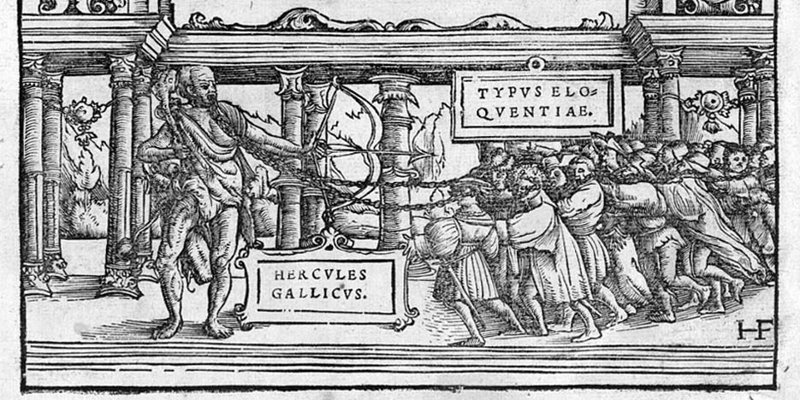
The orator moves the crowd with his speech, as if chains were stretched from his tongue to their ears.
Rhetoric and argumentation are related but distinct disciplines. While both aim to convince others, they differ in their methods and goals.
Argumentation
Argumentation aims to convince through logical reasoning and evidence. It appeals primarily to the intellect and rationality of the audience.
Characteristics of argumentation:
- Focus on logical structure and validity
- Emphasis on proof and evidence
- Goal: rational persuasion through reasons
- Consideration of counterarguments
- Transparency of premises and conclusions
Rhetoric
Rhetoric is the art of persuasive communication, which encompasses not only logical arguments but also emotional appeals, style and presentation. It aims to influence the audience through various means.
Characteristics of rhetoric:
- Use of language to persuade or move
- Consideration of the audience and the context
- Use of ethos (credibility), pathos (emotion) and logos (logic), the three means of persuasion according to Aristotle1
- Stylistic elements such as metaphors, analogies, repetition
- Goal: effective persuasion through various means
Differences and interplay
The main difference between argumentation and rhetoric lies in their focus:
- Argumentation concentrates on the logical structure and the truth of the premises.
- Rhetoric concentrates on effective communication and persuasion.
In practice, argumentation and rhetoric are often interwoven. A good speaker or writer uses both solid arguments and rhetorical techniques to convince their audience.
Example of pure argumentation: "All humans are mortal. Socrates is a human. Therefore Socrates is mortal."
Example of rhetoric without substantive argumentation: "Do you really want to be one of those who deny this obvious truth? Any reasonable person can see that our position is the only correct one!"
Example of the combination of argumentation and rhetoric: "Imagine a world in which children can grow up without fear of hunger. This is not a utopia, but an achievable goal. Studies show that targeted investments in agricultural education and infrastructure can increase food production in developing countries by up to 300%. By supporting our program, you can help make this vision a reality."
Critical thinking and rhetoric
For critical thinkers it is important to recognize rhetorical techniques and to distinguish between persuasive rhetoric and solid argumentation. Some questions that can help with this:
- What actual arguments are being presented?
- Are the arguments supported by evidence?
- Are emotional appeals used to bridge logical gaps?
- Is the speaker's credibility used as a substitute for evidence?
- Are counterarguments presented fairly and taken into account?
Artikel auf Deutsch | Article en français